Does a Small Business Still Need a Website in 2026? An Honest Answer
“Do I really need a website, or is that just something people keep saying?” It’s one of the questions small business owners ask most often, including on Reddit. Here’s a straight answer, with the data — and when you can honestly wait.
The short answer
For most small businesses that want new customers, yes. Not because a website is a rule, but because it’s the one place you own that answers a customer’s questions in full — and customers check. In BrightLocal’s 2026 consumer survey, 54% of people said they visit a business’s website after reading positive reviews.
That doesn’t mean you need a big or expensive site. For many local businesses, a clear one-page small business website is enough to start.
And a few businesses really can wait. More on that below.
What the data says
| Finding | Figure | Source |
|---|---|---|
| U.S. small businesses that have a website | 83% | Clutch survey of 406 owners, August 2025 |
| Consumers who visit a business’s website after reading positive reviews | 54% | BrightLocal Local Consumer Review Survey, 2026 |
| Consumers who use ChatGPT or other AI tools for local business recommendations | 45% | BrightLocal Local Consumer Review Survey, 2026 |
| ChatGPT users looking for local businesses who click through to a business website | 39% | BrightLocal, 2026 |
| Local searches that start on a phone | 73% | BrightLocal Consumer Search Behavior, 2026 |
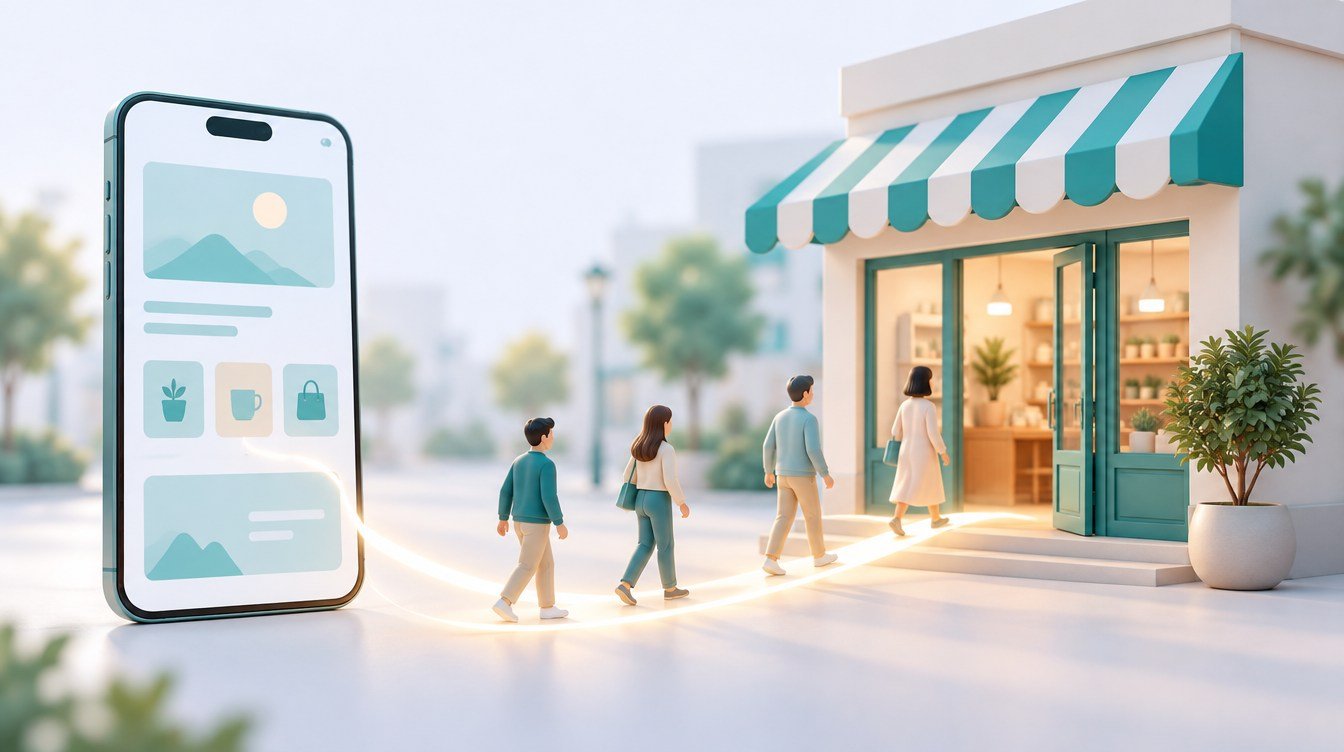
Put simply: most of your competitors already have a website, customers look for it after they hear good things about you, and a growing share of people are now asking AI tools for recommendations — and then clicking through to see who you are.
What a website does that social media can’t
Instagram, Facebook, and your Google Business Profile all matter, and you should keep them up to date. But each one has limits a website doesn’t:
- You own it. A platform can change its rules, its layout, or who sees your posts at any time. Your website stays yours.
- It answers questions in full. Services, prices, service area, hours, parking, insurance, languages spoken — a website has room for all of it, in your own words.
- It works while you sleep. Online booking, quote requests, and contact forms catch customers after hours.
- It gives search engines and AI something to check. AI tools cross-check what different sources say about you. A website with clear, consistent details makes those answers more confident. In our study of 97 NYC dental websites, the most common gaps were missing answers to patient questions and missing structured data — both things a website is built to provide.
- It makes you look established. For many customers, a business with no website feels less certain than one with a simple, professional site.
When you can honestly wait
A website isn’t the first priority for everyone. It’s reasonable to hold off if:
- You’re testing an idea. If you aren’t sure the business will last, start with a complete Google Business Profile and a social page, and build a site once it’s working.
- You’re fully booked through referrals. If word of mouth fills your calendar and you don’t want more customers right now, a website can wait.
- You only sell on a marketplace. If all your sales happen on Etsy or Amazon, put your effort there first — until you want customers who buy from you directly.
Even then, set up your Google Business Profile carefully. It’s free, and it’s often the first thing people and AI tools see.
When you need one now
- You want new customers who don’t already know you.
- People ask the same questions every week — prices, hours, what’s included.
- You want customers to book, request quotes, or pay online.
- You serve customers in more than one language.
- You want to show up when people ask ChatGPT, Gemini, or Google’s AI for a recommendation.
- You want to sell products online from your own store, not just a marketplace.
What the smallest useful website looks like
If you decide you need one, you don’t have to start big. A good one-page site covers what most customers look for:
- What you do and who you serve, in one clear sentence.
- Your services, with prices or “starting at” ranges if you can share them.
- Your address or service area, hours, and phone number — matching your Google Business Profile exactly.
- A few real reviews or testimonials.
- Answers to the five to eight questions customers ask you most.
- One clear way to contact or book you.
That’s exactly what our GoCited Now plan is built around: one page, $799, delivered in 3–5 business days, with Google Business Profile setup and the same AI-visibility setup as our larger builds. If you want to compare options first, our guide to what a small business website costs in 2026 covers do-it-yourself, freelancer, and agency prices side by side. You can also see sites we’ve built.
Already have a website?
Then the question isn’t whether you need one — it’s whether it’s doing its job. Run it through our free AI-Readiness Checker to see how easy it is for search engines and AI to read. If the site is solid but customers still aren’t finding you, a monthly Get Cited plan focuses on visibility instead of a rebuild.
Frequently asked questions
Does a small business still need a website in 2026?
Most do, though not every business needs a big one. If you want new customers to find you through Google, AI tools, or reviews, a website is the one place you control that answers their questions in full. BrightLocal's 2026 survey found that 54% of consumers visit a business's website after reading positive reviews. A very new business or one that is fully booked through referrals can often start with a strong Google Business Profile and add a simple website later.
Isn't a Google Business Profile or Instagram page enough?
They help a lot, and you should have both, but you don't own either one. The platform decides what is shown, how much room you get, and who sees your posts. A website holds your full services, prices, hours, booking, and answers to common questions in one place, and it is a source that search engines and AI tools can check against your other listings.
What is the cheapest way to get a real website?
A do-it-yourself builder is the lowest cash cost if you have time to design and write it yourself. If you want it done for you, a single-page site is the most affordable professional option. GoCited's single-page website is $799, delivered in 3 to 5 business days, with Google Business Profile setup included.
Do AI tools like ChatGPT use my website?
They can. AI tools draw on many sources, including your Google listing, reviews, and directories, and your website is one of the main places they can read your services and details in full. BrightLocal's 2026 research found that 45% of consumers use ChatGPT or other AI tools for local business recommendations, and that 39% of ChatGPT users looking for local businesses click through to a business website.
Disclosure. GoCited is a bilingual (English/Korean) web and AI-visibility studio in New York, and we build websites for small businesses. This guide includes situations where we think you don’t need one yet.
Ready for a website that works?
Tell us about your business and get a fixed quote. No sales call required.
Get my quote